How Multi-Carrier Rate Aggregation Reduces Shipping Costs
Explore how multi-carrier rate aggregation can significantly reduce shipping costs and improve delivery efficiency for businesses.
How Multi-Carrier Rate Aggregation Reduces Shipping Costs
Cut shipping costs by up to 12%. Multi-carrier rate aggregation allows businesses to compare shipping rates across multiple carriers in real-time, helping them choose the most cost-effective option for every shipment. This strategy is especially useful for LTL (less-than-truckload) and truckload shipping, where rising costs and customer demands for fast, affordable delivery are major challenges.
Key Benefits:
- Save 3% to 12% on shipping costs through rate comparisons.
- Improve delivery speed and reliability by using multiple carriers.
- Avoid disruptions by switching carriers during delays or peak seasons.
- Gain access to better rates using strategies like lane bundling.
How It Works:
- Systems analyze shipment details (weight, destination, handling needs) and pull rates from various carriers via APIs.
- Businesses compare options based on cost, speed, and reliability.
- Automated tools assign shipments to the lowest-cost carrier, factoring in real-time data.
Example Savings:
An electronics retailer saved 20% by automating carrier selection, while another business cut costs by 23% using multi-carrier tools.
Multi-carrier systems, like ShipPeek LTL TMS, simplify this process by centralizing carrier connections, offering unlimited rate requests, and providing fixed pricing plans starting at $999/month. They make it easier for businesses to reduce shipping expenses, improve delivery performance, and stay competitive in today’s demanding market.
Research Findings on Multi-Carrier Strategies
Cost Reduction Data from Multi-Carrier Studies
Research indicates that adopting a multi-carrier strategy can trim shipping costs by anywhere from 3% to 10%, with some cases reporting savings as high as 12% [7]. These reductions stem from increased competition among carriers, which drives prices down and enhances flexibility [1][2].
For example, an electronics retailer implemented automated carrier selection systems and achieved up to 20% in savings. This was accomplished by dynamically routing orders based on real-time data, performance metrics, and cost thresholds [3][4][5].
A key benefit of multi-carrier strategies is what researchers refer to as “granular rate optimization.” By meticulously comparing options across weight classes, shipping zones, and service levels, businesses can avoid premium pricing and secure better rates [1].
Given that shipping costs can account for as much as 10% of an online store’s revenue [6], even small reductions in these expenses can significantly enhance profitability. Additionally, these savings often go hand in hand with faster shipping times and improved customer experiences.
Delivery Performance and Customer Impact Data
Multi-carrier strategies don’t just save money - they also improve delivery performance. In an analysis of 20 million parcels, international shipments through multi-carrier networks were up to 37% faster, cutting delivery times to France by 4 days and to Germany by 6 days [1]. These faster delivery times are directly linked to higher customer satisfaction scores [9].
During the 2019 holiday season, a cosmetics company successfully navigated peak surcharges and capacity restrictions by leveraging a multi-carrier approach. This strategy enabled them to achieve record sales while also reducing shipping costs.
The operational advantages of multi-carrier systems extend beyond cost and speed. They provide built-in redundancy, shielding businesses from disruptions caused by carrier-specific issues, capacity shortages, and external factors like weather or labor strikes [8][1][9]. In contrast, relying on a single carrier can result in inconsistent transit times during peak seasons or even complete shutdowns during major disruptions [1][8].
These enhancements in performance offer a competitive edge. Businesses utilizing multi-carrier strategies can provide customers with more delivery options and faster shipping, which ultimately leads to higher satisfaction rates [9]. The evidence strongly supports the idea that multi-carrier rate aggregation not only drives cost savings but also elevates delivery performance to meet customer expectations.
Multi-Carrier Rate Shopping: How to reduce shipping costs without losing customers to slow delivery
::: @iframe https://www.youtube.com/embed/Z9_tkF-ezAA :::
How Multi-Carrier Rate Aggregation Cuts Shipping Costs
Multi-carrier rate aggregation brings carriers into direct competition, empowering businesses to select the most cost-effective shipping options through real-time data and optimized routing.
Comparing Rates Across Multiple Carriers
With multi-carrier rate aggregation systems, businesses can access real-time shipping rates from various logistics providers [10]. Instead of sticking to a single carrier, companies can choose the best option for each shipment, saving money and improving efficiency.
For example, USPS might be the most affordable choice for small, lightweight parcels, while FedEx could offer better rates for heavier items [10]. This tailored approach ensures businesses are only paying for services that align with their specific shipping needs.
Additionally, rate comparison tools help businesses uncover hidden costs, such as surcharges or peak season fees, that can inflate shipping expenses [10]. For instance, during busy seasons, one carrier might impose steep surcharges, while another keeps rates steady. By evaluating these costs in real time, companies can sidestep unexpected expenses and keep their shipping budgets in check.
High-volume shippers gain even more through automated routing within multi-carrier systems. These tools automatically assign shipments to the lowest-cost carrier based on factors like weight, destination, and service requirements [11]. One business, for instance, achieved a 23% reduction in shipping costs by using automated multi-carrier allocation [10]. This streamlined rate comparison not only saves money but also encourages carriers to remain competitive.
How Carrier Competition Drives Down Prices
When carriers know they’re vying for each shipment, they often lower their base rates and improve service terms to stay competitive. This dynamic is particularly beneficial for businesses with high shipping volumes, as carriers are more likely to offer aggressive pricing to secure their business.
The competition doesn’t stop at base rates - it extends to additional fees. Carriers may reduce or waive charges like residential delivery surcharges, dimensional weight penalties, or fuel surcharges. Over thousands of shipments, these savings can add up significantly. Moreover, the ability for businesses to easily switch carriers pushes providers to improve their offerings, from better tracking technology to more reliable delivery services. These competitive pressures also open the door to further savings through strategies like lane bundling.
Lane Bundling for Better Contract Rates
Lane bundling is a powerful strategy where businesses group shipments along similar routes or destinations to negotiate better rates and avoid the unpredictability of spot market pricing. By consolidating shipments along specific lanes, businesses create a steady volume that carriers value when setting contract rates.
Multi-carrier systems make lane bundling easier by analyzing shipping patterns and identifying opportunities for consolidation. These tools can automatically group shipments by factors like destination zones, delivery timeframes, or service requirements, creating virtual lanes that qualify for volume discounts - even when working with multiple carriers.
This strategy also acts as a buffer against fluctuating market rates. Instead of dealing with sudden price spikes, businesses can lock in stable contract rates. During peak seasons, these contracted rates can result in significant savings.
Lane bundling is especially effective for regional and last-mile deliveries. By focusing shipments in specific geographic areas, businesses can negotiate better rates with local and regional carriers, which often charge less than national carriers for certain routes [10]. This geographic focus ensures shipments take the most cost-effective paths to their destinations. Together, these strategies provide a comprehensive way to lower shipping costs while maintaining flexibility and reliability.
sbb-itb-8138a00
Operational Benefits of Multi-Carrier Integration
Better Flexibility During Shipping Disruptions
Multi-carrier integration does more than just cut costs - it adds a layer of resilience to your shipping operations. By using multiple carriers, businesses can keep shipments on track even when disruptions occur. Instead of being tied to a single carrier, companies have the ability to switch to alternatives quickly, ensuring delivery deadlines are met [12][13].
Events like severe weather, labor strikes, or capacity limits during peak seasons can bring single-carrier operations to a halt. However, multi-carrier systems solve these issues by offering a variety of routing options [12][14][15]. If one carrier encounters a problem, the platform automatically identifies and reallocates shipments to another provider in real time [10][15]. This ensures delivery schedules stay intact and helps protect customer satisfaction.
ShipPeek LTL TMS: Multi-Carrier Rate Aggregation in Action
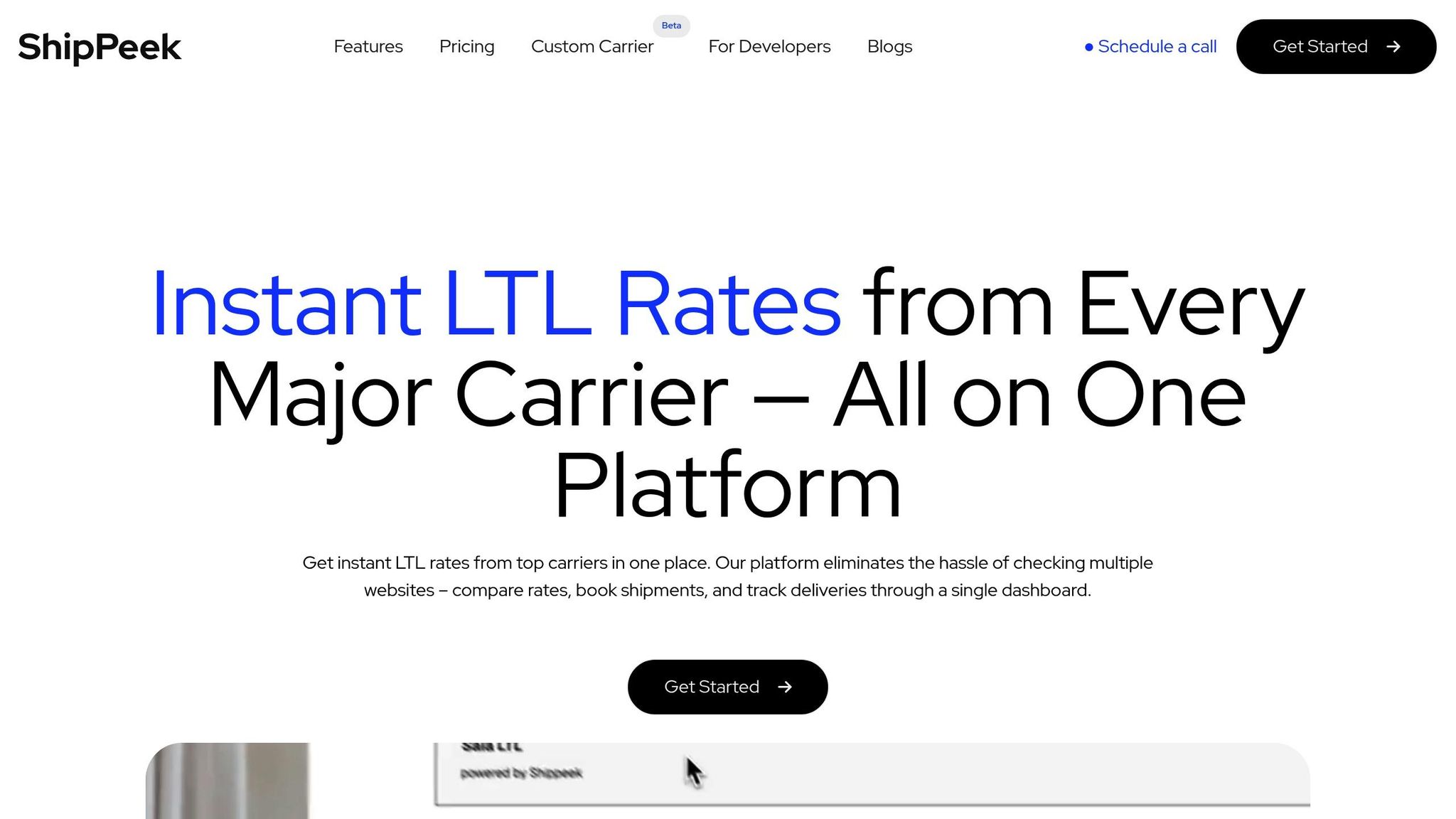
ShipPeek LTL TMS demonstrates how multi-carrier integration can transform shipping operations. By centralizing carrier connections through a single API, it simplifies processes like rate quoting, booking, and tracking, all while cutting down on administrative tasks. This approach aligns perfectly with strategies aimed at saving costs and boosting efficiency.
Unlimited Rate Requests and Carrier Integration
With ShipPeek LTL TMS, businesses can make unlimited real-time rate requests via its API. This feature allows companies to compare shipping prices instantly, find cost-effective options, and generate quotes on the spot. Plus, the platform integrates effortlessly with existing systems and multiple carriers, removing the hassle of managing separate carrier relationships and streamlining operations [16].
Fixed Pricing Model for Predictable Costs
To tackle the unpredictability of per-transaction API fees, ShipPeek offers a fixed pricing model. Plans start at $999 per month, with a special introductory rate of $749 per month for the first three months. This flat-rate setup makes budgeting for shipping technology straightforward, supports unlimited orders and labels, and eliminates the need for juggling multiple carrier accounts.
Tools for Booking, Tracking, and Live Rates
ShipPeek’s Live Checkout Rates ensure accurate, real-time pricing updates, while its booking and tracking tools provide complete visibility into shipments. These features, accessible through a single interface, help maintain consistent workflows across all integrated carriers for a smoother shipping process [16].
Conclusion: Cost Savings and Efficiency Through Multi-Carrier Rate Aggregation
The advantages of multi-carrier rate aggregation are undeniable. It helps businesses reduce shipping expenses and streamline logistics by taking advantage of competitive carrier pricing and making smarter routing decisions.
This approach not only saves money but also enhances operational flexibility. By accessing real-time data, companies - especially small and medium-sized ones - can make informed decisions and tap into carrier networks and rates that were once out of reach.
Technology platforms are the backbone of this strategy. For example, ShipPeek LTL TMS offers robust multi-carrier integration, removing administrative hurdles with unlimited API rate requests and a fixed pricing model starting at $999 per month. This kind of solution supports the cost-saving and efficiency goals outlined in this discussion.
The evidence is clear: multi-carrier rate aggregation helps businesses cut costs, improve operational agility, and deliver better customer experiences. Companies adopting this strategy position themselves to thrive with lower shipping expenses, increased flexibility, and the ability to respond quickly to market changes.
For businesses aiming to optimize their shipping operations, adopting a multi-carrier strategy supported by the right technology is a must in today’s competitive shipping environment.
FAQs
How does using multi-carrier rate aggregation help businesses save on shipping costs?
Multi-carrier rate aggregation lets businesses compare real-time shipping rates from various carriers, helping them pick the most budget-friendly option for every shipment. This process eliminates the hassle of manually searching for rates and ensures companies consistently secure the best deal.
On top of that, automating processes like rate requests, booking, and tracking cuts down on administrative work, saving time and reducing costs. It also helps avoid delays or disruptions that could lead to surprise expenses, streamlining operations and keeping budgets on track.
What are the benefits of using a multi-carrier system during busy shipping seasons?
Using a multi-carrier system during peak shipping seasons comes with several important benefits. It helps businesses avoid delays caused by carrier capacity issues or service interruptions, ensuring deliveries stay on track even when demand surges. With access to multiple carriers, companies can compare rates instantly and select the most economical and efficient shipping options available.
This strategy not only streamlines handling higher shipping volumes but also cuts costs and speeds up deliveries. The flexibility it provides allows businesses to respond quickly to shifting demands, making it a valuable solution for staying efficient during the busiest times of the year.
What is lane bundling, and how can it help businesses save on shipping costs?
Lane bundling is the practice of merging several low-volume or regional shipping lanes into fewer, higher-volume routes. This approach allows carriers to make better use of their networks, boost truckload efficiency, and secure more favorable shipping rates. By consolidating shipments and increasing freight density, businesses can often cut shipping costs by 3% to 12%.
On top of that, combining shipments headed to the same region or delivery zone helps reduce empty miles, making the entire shipping process more efficient. When used alongside multi-carrier rate aggregation, lane bundling can unlock even greater cost reductions and simplify logistics management.