LTL Shipping API: Compare Freight Quotes Instantly
LTL shipping APIs streamline freight quoting, offering real-time comparisons, cost savings, and efficient management for businesses of all sizes.

LTL Shipping API: Compare Freight Quotes Instantly
Finding the best freight rates used to be slow and tedious. Not anymore. LTL shipping APIs now let businesses compare quotes from multiple carriers in seconds, saving time and cutting costs. These tools connect directly to carrier systems, providing real-time rates, transit times, and booking options through a single platform.
Why this matters:
- Manual quoting takes hours, involves spreadsheets, and adds hidden labor costs.
- API-driven platforms like ShipPeek LTL TMS simplify the process with automated rate requests, bookings, and tracking.
- Flat-rate pricing ($749/month promotional rate) eliminates per-shipment fees, making it ideal for scaling operations.
Key Benefits of LTL Shipping APIs:
- Speed: Get quotes in minutes instead of days.
- Cost Savings: Reduce administrative expenses with automation.
- Scalability: Handle unlimited quotes without extra staff.
- Accuracy: Minimize human errors with direct carrier data.
While manual quoting still has niche uses for specialized shipments, automated solutions offer a faster, more efficient way to manage LTL freight. Platforms like ShipPeek help businesses save time, improve accuracy, and find competitive rates - all in one place.
Freight API & Logistics Automation | Cut Shipping Costs 30–50%
::: @iframe https://www.youtube.com/embed/KExlsI99Zjg :::
1. ShipPeek LTL TMS
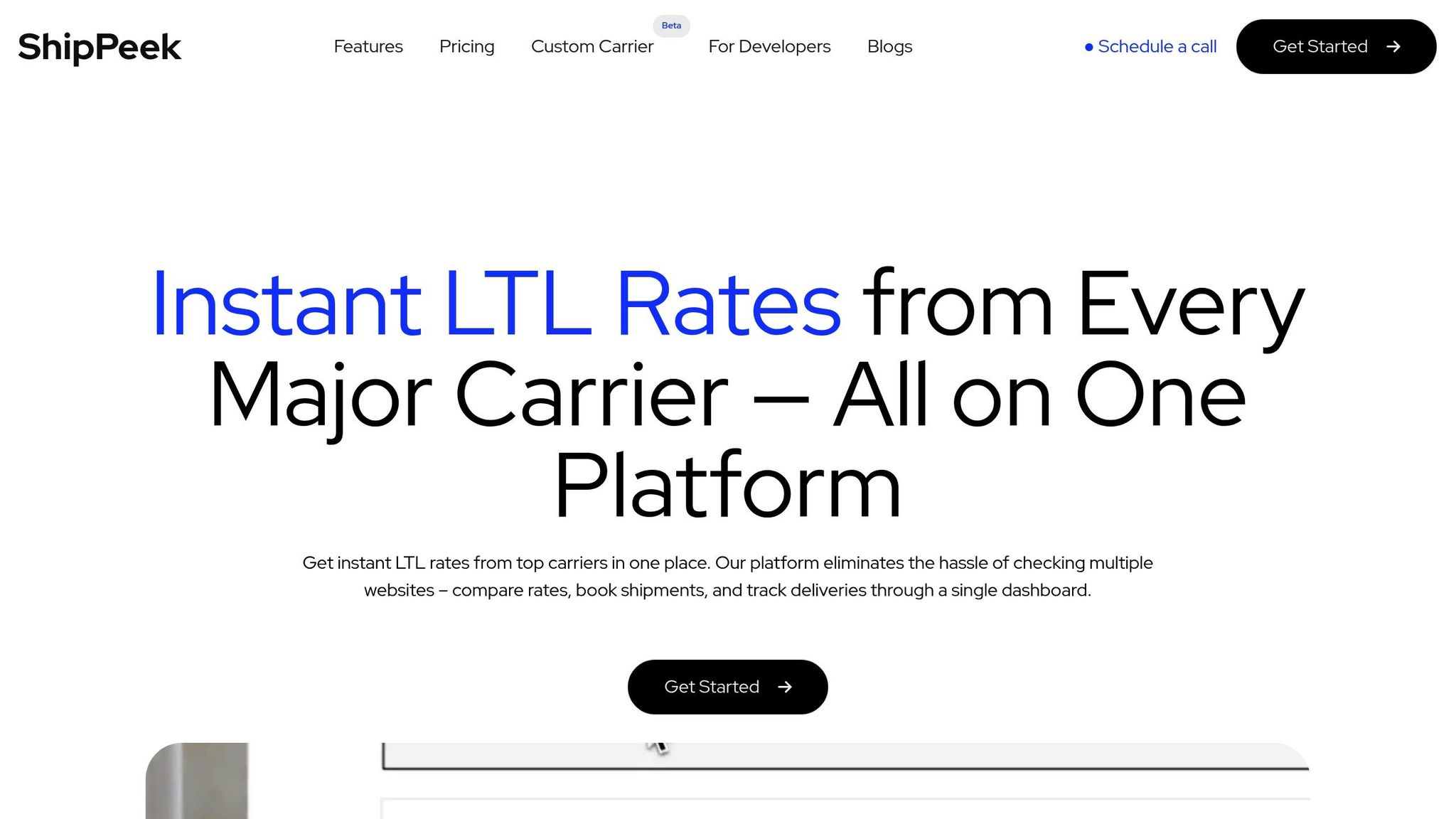
ShipPeek LTL TMS brings a fresh approach to freight quoting with its all-in-one logistics API platform. This SaaS tool tackles the common challenges of managing LTL shipments by simplifying rate requests, bookings, and tracking across multiple carriers.
Cost Efficiency
One of ShipPeek’s standout features is its flat-rate pricing. By eliminating per-shipment fees, it helps businesses cut down on logistics expenses. Pricing starts at $999 per month, but new users can take advantage of a promotional rate of $749 for the first three months, along with a 7-day free trial to test the platform. For high-volume shippers, this pricing model is a game-changer. Unlimited orders and labels mean businesses can scale operations without worrying about extra costs piling up.
Speed of Quote Retrieval
ShipPeek integrates directly with carrier systems to provide live checkout rates. Its API makes it possible to pull real-time rates and transit details with just a single call, saving time and ensuring accuracy.
Scalability
Designed to grow with your business, ShipPeek supports unlimited rate requests, making it ideal for companies handling fluctuating shipping volumes. Unlike traditional systems that may charge extra as your needs expand, ShipPeek keeps costs predictable. Plus, its multi-carrier integration allows businesses to broaden their shipping options without the hassle of overhauling their existing setup.
Automation Features
ShipPeek streamlines the entire shipping process by automating tasks from quoting to booking. With integrated booking and tracking features, businesses can manage their LTL shipments through one API connection. This reduces the need for manual input, freeing up logistics teams to focus on other priorities.
Up next, we’ll dive into how manual quoting stacks up against these automated benefits.
2. Manual Freight Quote Comparison
Old-school freight quoting relies on a time-consuming process: reaching out to carriers, waiting for replies, and juggling rates in spreadsheets. Unlike modern API-driven systems, this manual approach slows down workflows and introduces inefficiencies. As shipment volumes increase, these problems only get worse, making automation an appealing alternative.
Cost Efficiency
Manual quoting isn’t just about the shipping rates - it comes with hidden costs. Logistics teams spend hours contacting carriers and updating spreadsheets, which translates into higher operational expenses when you factor in wages.
For high-volume operations, the cost per quote can skyrocket. Companies managing hundreds of shipments each month could easily see administrative costs climb into the thousands, just from the time spent on manual processes. As shipment volumes grow, these delays and expenses become an even bigger drain on resources.
Speed of Quote Retrieval
With manual quoting, you’re at the mercy of carrier schedules. Most carriers take 24–48 hours to respond, and during peak seasons, it can take even longer. This creates bottlenecks, especially when customers need quick shipping estimates.
The process gets even slower when shipment details change or additional information is required. Each adjustment restarts the back-and-forth communication, delaying the entire process. Need a rush quote? Be prepared to pay extra. These timing issues become a significant challenge for businesses trying to scale.
Scalability
Manual systems hit their breaking point as shipping volumes grow. A single logistics coordinator might handle 50–100 quotes a week, but scaling up to 500 or 1,000 quotes means hiring more staff. This leads to a proportional increase in costs - double the shipments, double the workforce.
Peak seasons make the limitations of manual quoting even more obvious. Whether it’s the holiday rush or a busy manufacturing cycle, response times stretch as carriers struggle to keep up with demand. Without automation, managing data and maintaining efficiency becomes an uphill battle.
Automation Features
Manual quoting doesn’t offer the integration capabilities that modern businesses rely on. Each quote is treated as a standalone transaction, making it hard to track trends, evaluate carrier performance, or maintain consistent documentation. This creates data silos that limit meaningful analysis.
Record-keeping is another headache. Details like quote expiration dates, special handling requirements, and carrier-specific terms often get lost in email threads or buried in spreadsheets. This fragmented system makes it nearly impossible to analyze shipping costs or carrier performance over time in any meaningful way.
sbb-itb-8138a00
Pros and Cons
API-driven and manual freight quoting methods each come with their own set of advantages and challenges. Choosing the right approach depends on what best aligns with your business needs.
| Aspect | ShipPeek LTL TMS API | Manual Freight Quote Comparison |
|---|---|---|
| Cost Efficiency | Fixed pricing of $749/month (promotional rate for the first 3 months) allows unlimited rate requests, cutting down on variable costs per quote | Hidden labor costs arise from time spent contacting carriers and managing spreadsheets |
| Speed | Delivers quotes in minutes through real-time connections with carriers | Often takes a day or more, especially during busy periods |
| Scalability | Handles growing shipment volumes effortlessly without adding staff | Scaling up typically requires hiring more personnel to manage increased workload |
| Automation | Integrates live checkout rates and automates booking and tracking | Relies on manual data entry, with fragmented record-keeping and no system integration |
| Accuracy | Direct carrier connections reduce the likelihood of human error | More susceptible to errors due to manual processes |
| Coverage | Limited to carriers with API support, which may exclude some options | Can include any carrier willing to provide quotes manually |
The table above highlights the main differences between automated and manual quoting systems. Industry insights suggest that API-driven platforms significantly improve efficiency in rating, booking, and tracking processes. In fact, research supports these operational improvements[2].
Nick Osbern, senior procurement manager at Freightquote, stated, “Our API dramatically improves the customer experience and allows them to book their loads faster”[1].
That said, manual quoting still has its place, especially for specialized shipments or when personalized negotiations are necessary. Some carriers may offer detailed service options through direct communication - details that an automated system might overlook[2].
While API-driven platforms clearly streamline freight operations, they do require technical setup and occasional maintenance. On the other hand, manual approaches, though slower and more labor-intensive, may suit niche needs or unique shipment requirements[2][3].
Conclusion
LTL shipping APIs outperform manual quote comparisons in both speed and efficiency. With automated platforms like ShipPeek LTL TMS, businesses can compare hundreds of quotes in just seconds instead of spending hours sifting through options. This streamlined process allows for quicker decision-making and better allocation of resources[1][2].
The financial benefits are hard to ignore. In one instance, a business retrieved 40,000 quotes and saw conversion rates climb by roughly 30%[1][2]. Another example showed a 3.5% recovery of total LTL spend across multiple locations[4]. These numbers highlight the clear cost savings and operational improvements that API-driven solutions can bring to the table.
For companies looking to refine their shipping processes, the advice is simple: invest in an LTL shipping API or a TMS platform that connects with multiple carriers and provides real-time access to negotiated rates. This eliminates the hassle of contacting carriers individually and reduces the risk of human errors, ensuring the most cost-effective option is always chosen for every shipment.
ShipPeek LTL TMS makes the case even stronger with its competitive pricing. For a promotional rate of $749 per month, users get unlimited rate requests, booking, and tracking - no per-shipment fees, just predictable costs. These operational and financial perks reflect the broader transformation happening in the logistics industry.
FAQs
How does ShipPeek LTL TMS’s flat-rate pricing benefit businesses shipping large volumes?
ShipPeek LTL TMS uses a flat-rate pricing model that ensures consistent costs and potential savings for businesses handling high shipping volumes. Instead of charging per shipment, this approach often results in lower rates for larger volumes, making it easier to plan budgets and keep expenses in check.
This simplified pricing structure reduces the unpredictability of changing market rates, allowing businesses to streamline their shipping processes while maintaining budget control and boosting overall efficiency.
What are the benefits of using an LTL shipping API instead of manual freight quoting?
Using an LTL shipping API offers several advantages over manually handling freight quotes. For starters, it gives you instant access to real-time rates from various carriers. This means you can compare prices side-by-side and make quick, informed decisions without the hassle of manual research.
Beyond pricing, an API automates key parts of the shipping process - like data entry, booking, and tracking. By cutting down on repetitive tasks, it not only saves time but also minimizes errors. Plus, it enhances shipment visibility, making it easier to stay on top of your logistics. In short, it simplifies freight management while helping you save both time and money.
How does ShipPeek LTL TMS provide accurate freight quotes and reduce errors in the shipping process?
ShipPeek LTL TMS improves precision and cuts down on mistakes by automating essential shipping tasks such as rate requests, booking, and documentation. By reducing the chances of human error, it helps create a more seamless workflow.
The system connects directly with various carriers, allowing real-time data sharing and automatic updates. This removes the hassle of manual data entry, making the shipping process more efficient and dependable.