How LTL APIs Improve Ecommerce Checkout
LTL APIs improve ecommerce checkout with live shipping rates, transparent pricing, and automation that lowers cart abandonment and boosts conversions.
How LTL APIs Improve Ecommerce Checkout
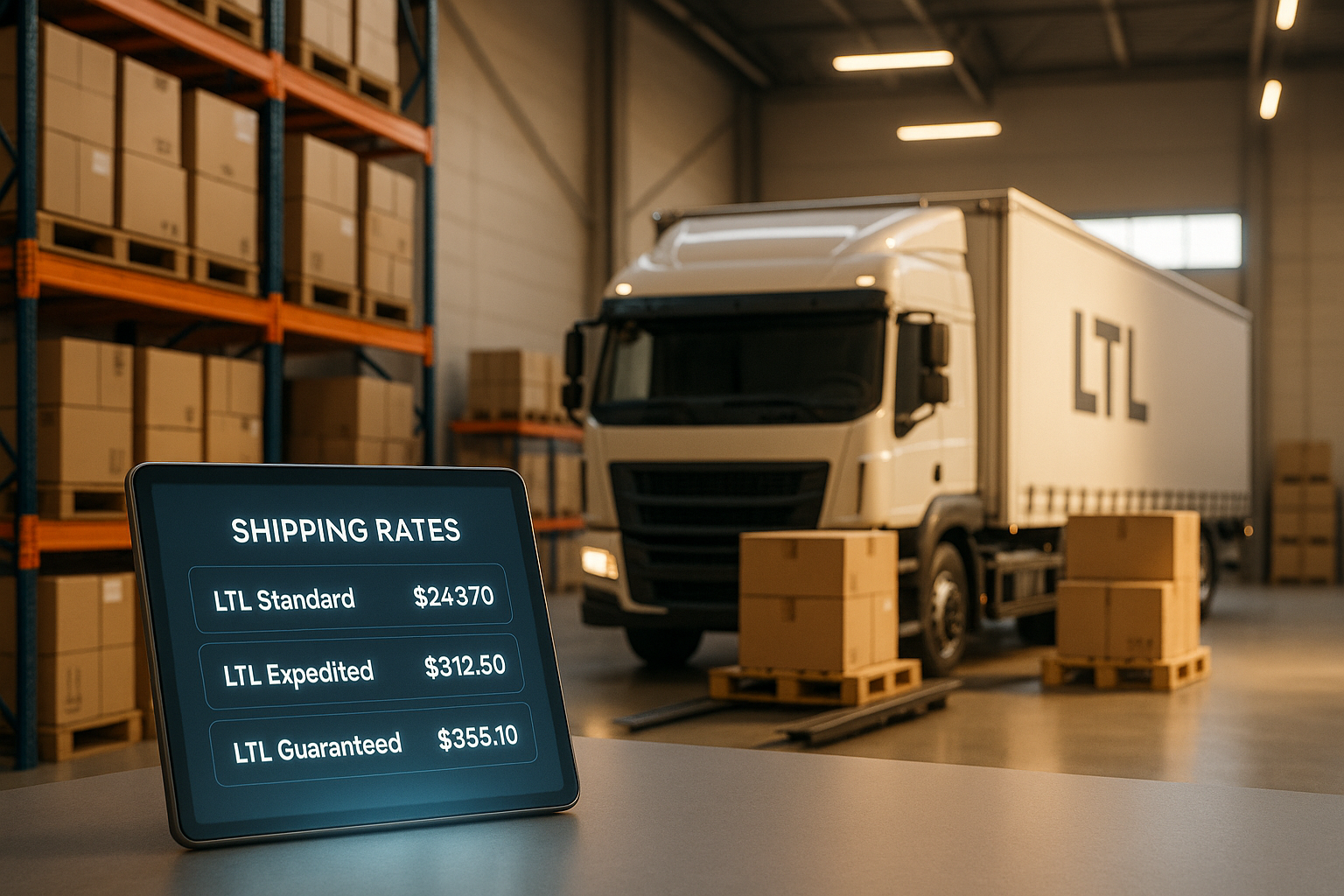
LTL APIs simplify ecommerce shipping and improve the checkout experience by automating freight operations. They provide real-time shipping rates, accurate delivery estimates, and transparent pricing, addressing common customer pain points like unexpected costs and unclear timelines. This leads to fewer abandoned carts and higher customer satisfaction. Additionally, these APIs streamline backend processes, reducing manual errors and saving businesses time and money.
Key takeaways:
- Real-time rates: Accurate shipping costs displayed during checkout.
- Transparent pricing: Eliminates surprise fees, building customer trust.
- Automation: Simplifies rate comparison, booking, and tracking.
- Improved checkout: Faster and more reliable process for customers.
- Cost savings: Optimized shipping decisions through automated rate shopping.
Platforms like ShipPeek LTL TMS offer a single API solution, providing unlimited rate requests, booking, and tracking for a fixed monthly fee, making it easier for businesses to manage LTL shipping efficiently.
How to Automate WooCommerce Freight Shipping with API | Easy Logistics
::: @iframe https://www.youtube.com/embed/ZlCZE3wWKeU :::
Real-Time Shipping Rates and Checkout Clarity
APIs play a key role in simplifying logistics, but real-time shipping rates take it a step further by enhancing the checkout process. For many ecommerce businesses, the checkout page is where customers decide whether to complete their purchase or abandon their cart. In fact, nearly 70% of online shopping carts are abandoned, with unexpected shipping costs being one of the top reasons [2]. This issue becomes even trickier with LTL (Less-than-Truckload) shipments, where pricing can be more complicated. Real-time shipping rate APIs solve this by providing instant and accurate pricing information.
Live Shipping Rate Calculations
One of the biggest hurdles in online shopping is unpredictable shipping costs. Real-time rate calculations eliminate this problem by instantly pulling shipping costs based on factors like weight, dimensions, destination, and delivery speed. These costs are displayed clearly in U.S. dollars, ensuring transparency.
By connecting directly with carrier systems, LTL APIs ensure that the prices customers see reflect current market conditions. This means no surprise fees popping up at the last moment, allowing customers to make informed decisions with confidence.
Many Shopify and WooCommerce stores already use apps that integrate real-time shipping rates. For example, some apps display “estimated shipping” directly under the “Add to Cart” button. This small feature can prevent sticker shock and help maintain customer trust [2].
Transparent pricing like this is a critical step in building trust during the checkout process.
Clear Cart Pricing and Customer Trust
When customers see clear and detailed pricing upfront, they feel more secure in their decision to buy. This is especially important for larger shipments, where unexpected fees can cause significant frustration. Knowing exactly what they will pay before completing the purchase makes customers more likely to follow through - and to shop again in the future.
Research shows that 36% of shoppers abandon their carts because they believe shipping fees are too high [4]. But often, it’s not just the cost - it’s the unexpected nature of those fees at checkout that erodes trust. Real-time APIs address this by breaking down shipping costs clearly and ensuring all charges are disclosed upfront.
One study highlighted how showing shipping fees early in the process significantly reduces cart abandonment rates [5]. While this example was from an international market, the principle applies just as well to domestic LTL shipments.
Multiple Shipping Options for Customers
Real-time pricing is just one piece of the puzzle. Offering multiple shipping options can further personalize and improve the checkout experience. LTL APIs enable businesses to present a range of choices - from standard to expedited shipping - complete with clear pricing and delivery timeframes in familiar U.S. date formats.
Delivery timing is a major factor for online shoppers. For instance, 29% of customers abandon their carts because they’re worried their orders won’t arrive on time. Another 20% leave due to slow delivery speeds, and 12% abandon their orders because they’re unsure about delivery dates [4]. By providing accurate delivery windows or estimated dates at checkout, real-time APIs help ease these concerns.
Some ecommerce platforms even let merchants specify delivery dates, giving customers the ability to plan ahead [3]. This level of clarity and flexibility not only makes the checkout process smoother but also boosts conversion rates by addressing common customer pain points.
Automated Operations Through API Integration
LTL APIs are changing the game for ecommerce businesses by streamlining shipping operations. Tasks that once demanded hours of manual work - like comparing rates, booking shipments, and managing carrier relationships - are now automated and completed in a fraction of the time. This shift toward automation is especially impactful for U.S. ecommerce businesses managing larger shipments, offering a significant boost in efficiency.
Automated Rate Shopping and Booking
Gone are the days of contacting individual carriers, waiting for quotes, and manually comparing rates. With APIs, businesses can instantly access real-time shipping rates, apply business rules to select the best option, generate shipping labels, and schedule pickups - all in one seamless process [1][6].
The benefits are clear: automation saves time, cuts down on human error, and speeds up fulfillment. Tasks that once required dedicated staff are now handled behind the scenes [6]. For instance, ShipPeek LTL TMS enhances this process by offering unlimited access to rate requests across multiple carriers. This means businesses can compare a wide range of shipping options for every order without worrying about API call limits or extra fees. Plus, this level of automation integrates effortlessly with ecommerce platforms.
Integration with Ecommerce Platforms
API integration takes things further by centralizing shipping management within ecommerce systems, reducing the need for manual intervention. This synchronization allows shipping processes to connect seamlessly with warehouse management systems (WMS) and order management systems (OMS) [1].
For example, Shopify stores can automatically select and book the best shipping option as soon as an order is placed. WooCommerce merchants can process LTL shipments for heavier orders without lifting a finger. Customer details, product specifications, and shipping preferences flow directly between order systems and carriers, eliminating manual input.
When choosing a shipping API, two factors stand out: the number of carrier connections and API speed. More carrier connections mean more choices and better pricing, while faster APIs ensure a smoother checkout process - essential for keeping customers happy [1].
Reducing Manual Errors in Logistics
Manual processes are prone to errors - like address typos, incorrect package dimensions, or selecting the wrong shipping service - that can delay shipments and rack up unnecessary costs. API integration tackles these issues head-on by standardizing data entry and validation, creating a more reliable and error-free shipping process.
For instance, automated address validation catches mistakes as customers input their shipping details, while package dimensions pulled directly from product catalogs ensure accurate rate calculations. APIs also format all shipping details according to each carrier’s requirements, reducing the risk of rejections or delays caused by documentation errors [6].
For U.S. businesses managing numerous LTL shipments each week, these error reductions lead to tangible savings. Fewer corrections mean lower costs, fewer customer service calls, and better delivery performance. Additionally, automated systems provide detailed tracking and performance data, making it easier to monitor shipping metrics and identify areas for improvement [7].
sbb-itb-8138a00
Better Customer Experience and Higher Conversions
With automated operations as a foundation, improved transparency is transforming the way customers shop online. When buyers can clearly see what they’re paying for shipping and track their orders in real time, they’re far more likely to finalize their purchase. LTL APIs make this possible by offering accurate shipping details throughout the checkout and fulfillment process. This transparency builds trust and confidence, leading to higher conversion rates.
It’s simple: unclear shipping costs and uncertain delivery timelines are two of the biggest reasons customers abandon their carts. LTL APIs solve both problems by delivering precise shipping calculations and dependable tracking updates, ensuring customers stay informed from the moment they place an order to when it arrives at their doorstep.
Real-Time Tracking and Shipment Updates
Today’s customers expect to know where their order is at all times - especially for larger shipments requiring LTL shipping. APIs make this easy by automating tracking updates directly from carriers to customers. Advanced LTL APIs go a step further, breaking down shipment progress into key milestones. These include when freight arrives at distribution centers, clears customs (for international orders), and reaches the final delivery terminal. Customers even receive estimated delivery windows tailored to local schedules and business days.
Take ShipPeek LTL TMS, for example. It consolidates tracking data into a single platform, creating a unified and professional tracking experience. Instead of redirecting customers to various carrier websites with inconsistent designs, businesses can maintain their branding while delivering the detailed tracking information customers crave.
This level of detail is particularly crucial for B2B customers, who often need to coordinate receiving shipments with their warehouse teams. By simplifying tracking and providing clear updates, businesses can streamline the checkout process and improve customer satisfaction.
Faster and More Reliable Checkout Process
Speed is key when it comes to checkout. Customers expect shipping rates to load instantly, especially for heavy or oversized items. With LTL APIs, shipping rates appear in seconds, ensuring the price customers see at checkout aligns with actual carrier charges.
Quick and accurate checkout processes also help prevent cart abandonment. When shipping options load without delay and customers can see their total costs - including shipping, handling, and taxes - they’re more likely to complete their purchase. This smooth experience reinforces the perception of a professional, trustworthy business.
For companies managing multiple LTL shipments daily, the benefits of speed are even greater. Faster transactions mean fewer customer inquiries about pricing, higher checkout conversion rates, and significant time savings across all orders. These efficiency gains not only improve customer experience but also enhance operational productivity.
Meeting U.S. Customer Expectations
In the U.S., customers value more than just speed and transparency - they also expect flexibility. They want clear delivery options with no hidden fees, the ability to choose between faster shipping or cost savings, and accurate delivery timeframes. LTL APIs empower businesses to meet these demands by offering a range of shipping options at checkout.
Scheduling flexibility is another expectation, particularly for LTL shipments that often require delivery appointments for business addresses. APIs can sync with carrier scheduling systems, allowing customers to select delivery windows that align with their needs and the carrier’s route plans.
Quick problem resolution is also a must in the U.S., where customer service is highly valued. APIs that provide detailed tracking and proactive notifications enable customer service teams to address potential issues before customers even need to reach out. This proactive approach ensures a smoother experience and aligns with expectations for responsive service.
Regional factors play a role, too. A business shipping from California to New York needs to provide accurate transit times for cross-country deliveries, while shipments within the same state might offer next-day or two-day delivery. LTL APIs handle these variations seamlessly, presenting customers with realistic delivery timelines based on their location and the shipment’s origin.
The combination of speed, transparency, and reliability that LTL APIs offer directly translates into higher conversion rates. When customers trust the shipping details they see at checkout and feel assured about delivery timelines, they’re more likely to complete their purchase - and come back for future orders.
Cost Savings and Competitive Benefits
LTL APIs not only streamline logistics but also help businesses cut costs and improve their market position. By enabling real-time access to shipping rates and automating logistics workflows, companies can reduce manual errors and redirect staff efforts toward more strategic initiatives. These efficiencies amplify the cost-saving potential of API integration, strengthening a company’s competitive advantage throughout the shipping process.
Lower Costs Through Rate Comparison
One of the standout perks of LTL APIs is real-time rate comparison across multiple carriers. Instead of juggling calls or visiting various carrier websites, businesses can instantly review a wide range of shipping options. This eliminates guesswork and ensures companies can always choose the most cost-effective solution.
Platforms like ShipPeek LTL TMS take this a step further by offering unlimited rate requests without additional fees. This allows businesses to thoroughly compare shipping options and make smarter, more informed decisions.
API Automation vs. Manual Processes
Switching from manual processes to automated API systems brings clear advantages. Manual shipping calculations are not only tedious but also prone to errors, which can lead to unexpected costs and customer dissatisfaction.
| Feature | API Automation | Manual Processes |
|---|---|---|
| Rate Accuracy | Real-time, precise rates | Estimated rates with potential discrepancies |
| Cost Optimization | Unlimited carrier comparisons for better pricing | Limited options, often resulting in higher costs |
| Efficiency | Instant, automated rate shopping | Time-consuming and error-prone calculations |
By automating these tasks, businesses gain predictable pricing and free up resources for activities that drive revenue. Plus, the reduced risk of errors helps avoid costly disputes and inaccuracies.
ShipPeek LTL TMS: Unlimited Rates and Fixed Pricing
ShipPeek LTL TMS stands out with its flat-rate pricing model. For a monthly fee starting at $999 (with a promotional rate of $749 for the first three months), businesses get unlimited API requests. This means companies can request as many rate comparisons as they need without worrying about additional charges.
With this unlimited access, businesses can evaluate multiple shipping options, compare delivery times, and make well-informed decisions - all within a single, integrated platform that handles rate requests, booking, and tracking.
For ecommerce companies, this fixed pricing model is a game-changer. Whether managing a few shipments or hundreds each month, the consistent costs combined with improved operational efficiency make ShipPeek LTL TMS an attractive choice for optimizing shipping operations and scaling effectively.
Conclusion: Key Benefits of LTL APIs for Ecommerce
Summary of LTL API Benefits
LTL APIs bring a new level of efficiency and transparency to ecommerce shipping, especially during checkout. They simplify freight operations by providing real-time shipping rates, giving customers clear and upfront pricing. This not only builds trust but also reduces cart abandonment, encouraging more customers to complete their purchases. For example, Kuehne+Nagel’s eCommerce buyer’s experience highlights how API-powered tools can instantly pull competitive LTL freight rates from multiple carriers, allowing customers to see total costs upfront and confidently finalize their orders [8].
In addition, fixed pricing models offered by LTL APIs make it easier for businesses to manage budgets while supporting growth. Platforms like ShipPeek LTL TMS exemplify how these tools can streamline shipping operations and improve overall efficiency.
Getting Started with ShipPeek LTL TMS
ShipPeek LTL TMS takes these benefits a step further by offering a comprehensive solution to simplify shipping management and enhance customer satisfaction. Through a single API integration, users can access unlimited rate requests, booking, and tracking features, removing the hassle of juggling multiple carrier relationships.
The platform is available for $999 per month, but new users can take advantage of a promotional rate of $749 for the first three months. This fixed-cost model allows businesses to scale without worrying about additional per-request fees. Plus, ShipPeek offers a 7-day free trial, giving companies the chance to see how its streamlined integration can improve checkout processes, boost customer trust, and cut costs.
With seamless access to multiple carriers and a focus on efficiency, ShipPeek LTL TMS ensures businesses have the tools they need to meet the demands of modern ecommerce while providing customers with a smooth and transparent shipping experience.
FAQs
How do LTL APIs with real-time shipping rates help reduce cart abandonment in ecommerce?
LTL APIs that deliver real-time shipping rates can play a big role in cutting down cart abandonment. How? By offering clear and precise shipping costs right at checkout. When customers see the full picture without unexpected fees popping up, they’re less likely to abandon their carts out of frustration or mistrust.
On top of that, instant rate updates make the checkout process quicker and more seamless. This reduces delays and potential irritation, creating a smoother experience overall. By building trust and simplifying the steps to purchase, these APIs make it easier for customers to follow through with their orders.
What are the advantages of using LTL APIs to automate shipping compared to handling it manually?
Automating shipping with LTL APIs brings a host of benefits compared to traditional manual processes. By automating up to 95% of repetitive tasks, these APIs help businesses improve operational efficiency, reduce errors, and better manage costs.
LTL APIs also provide real-time shipping rates and updates, which minimize manual mistakes, save valuable time, and make decision-making much easier. The result? Faster checkout processes, more reliable shipping, and noticeable cost savings for your business.
How do LTL APIs help businesses create a transparent and trustworthy checkout experience?
LTL APIs give businesses the tools to improve transparency and build trust during checkout by offering real-time shipping rates and precise delivery timelines. With this information, customers can see costs upfront and make confident decisions, avoiding surprises like hidden fees or unexpected delays.
These APIs also provide automated shipment updates, keeping customers informed every step of the way. This increased visibility not only boosts customer confidence but also reduces the need for support calls or emails, making the delivery process smoother for everyone involved.