Top 5 LTL APIs for Carrier Communication
Compare five leading LTL APIs for rate quotes, bookings, tracking, eBOLs, and pricing to find the best fit for your shipping needs.
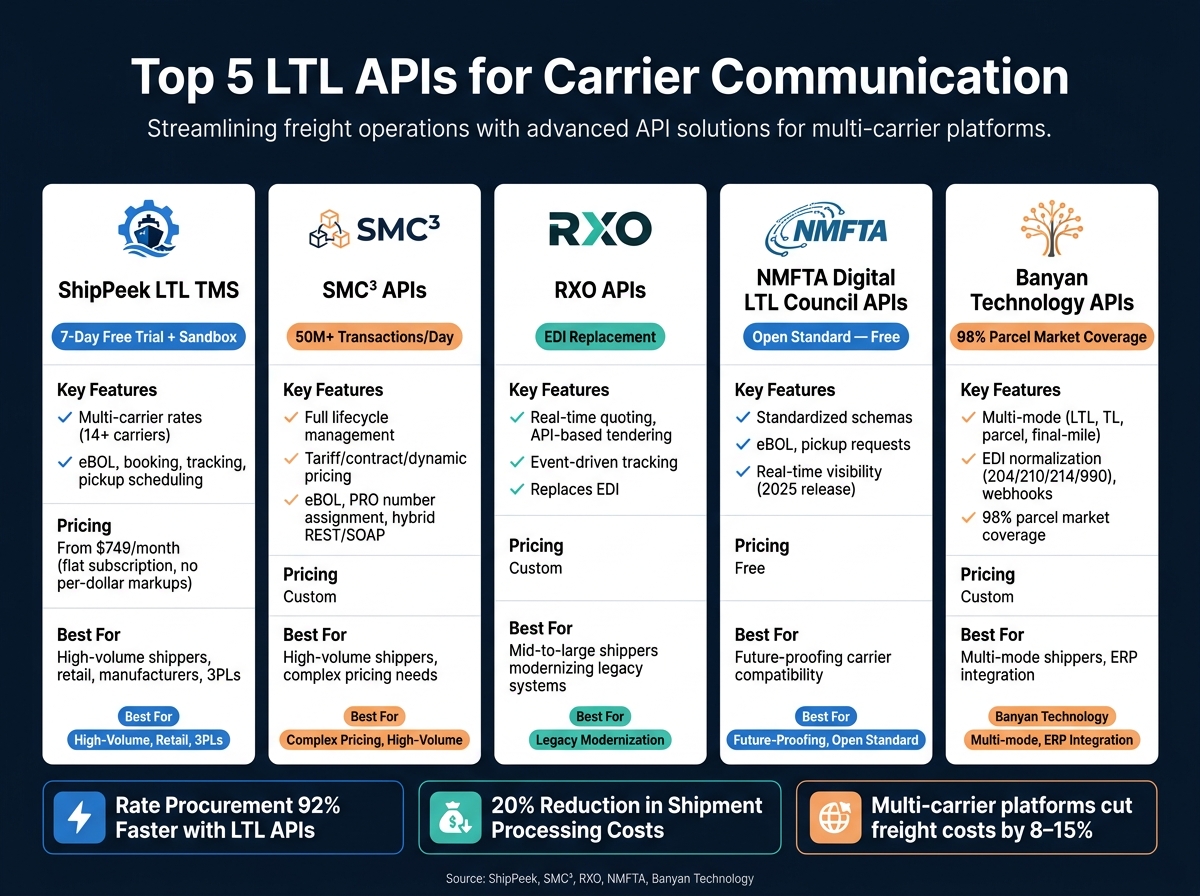
Manually managing freight shipments is slow and costly. LTL APIs simplify this by connecting your systems directly to carriers, automating tasks like rate quotes, bookings, tracking, and invoicing. These tools can reduce shipment processing costs by 20% and speed up rate procurement by 92%.
Here’s a quick look at the top 5 LTL APIs that can streamline your shipping operations:
- ShipPeek LTL TMS: Access rates from 14+ carriers, book shipments, and track deliveries. Starts at $749/month with a free trial.
- SMC³ APIs: Offers lifecycle management, precise pricing, and hybrid REST/SOAP design for high-volume operations.
- RXO APIs: Replaces outdated EDI with real-time quoting and tracking for mid-to-large shippers.
- NMFTA Digital LTL Council APIs: Standardized schemas for eBOL, pickups, and visibility, ensuring compatibility with future carrier systems.
- Banyan Technology APIs: Multi-mode support with tools to normalize EDI files and streamline ERP integrations.
Each API supports key features like real-time rates, eBOLs, tracking, and cost-effective pricing models. Choosing the right one depends on your shipment volume, technical needs, and carrier network preferences.
Quick Comparison
| API | Key Features | Pricing | Best For |
|---|---|---|---|
| ShipPeek LTL TMS | Multi-carrier rates, eBOL, tracking | $749/month | High-volume shippers, retail, 3PLs |
| SMC³ APIs | Precise pricing, hybrid REST/SOAP | Custom | High-volume shippers, complex needs |
| RXO APIs | Real-time quoting, API-based tracking | Custom | Mid-to-large shippers |
| NMFTA APIs | Standardized schemas | Free | Future-proofing carrier systems |
| Banyan Technology | Multi-mode, EDI normalization | Custom | Multi-mode shippers, ERP integration |
Pro Tip: Test APIs in a sandbox environment to evaluate performance, ease of integration, and pricing alignment with your growth plans.
GAME OVER for API Aggregators in the LTL Industry
sbb-itb-8138a00
What Makes a Great LTL API?
Not all LTL APIs are created equal. Before jumping into the top options, let’s break down the key factors that set a great LTL API apart. These criteria help evaluate how well an API supports the needs of shippers and developers alike.
Core LTL Functions
A strong LTL API should handle every step of the shipment process. This includes real-time quoting across various carriers, Electronic Bill of Lading (eBOL) transmission, assigning PRO numbers before pickup, digital scheduling for pickups, and automated invoice submissions through REST. On the tracking side, it’s essential to have standardized tracking milestones. Some advanced APIs even offer handling unit-level tracking for multi-piece shipments, supporting up to 200 handling units in a single shipment [4].
Carrier Network and Connectivity
The broader the carrier network, the better the coverage - and the potential for cost savings. Multi-carrier platforms can cut freight costs by 8–15% by introducing competition into the rate selection process [12]. However, it’s crucial to confirm that the API supports any specific accessorials your shipments require, such as liftgate services or hazmat handling. If a carrier doesn’t support a requested accessorial, the API will automatically exclude them from the rate results [13].
Developer Experience and Integration Ease
“LTL is the most fragmented segment of freight technology; shopping rates across multiple carriers requires multiple integrations.” - Warp [2]
This fragmentation is why a smooth developer experience is so important. The best APIs provide self-serve sandbox access (no need for a sales call), public OpenAPI specifications, webhook support for real-time updates, and clean REST/JSON responses. Traditional carrier integrations often take weeks due to varying authentication methods and data schemas [2]. A unified API simplifies the process, reducing integration time from weeks to just a few days.
Performance and Reliability
For high-volume U.S. shippers, speed and reliability are non-negotiable. Leading APIs deliver multi-carrier quotes in under 2 seconds [12] and boast up to 99.9% uptime [10]. Downtime during peak shipping hours doesn’t just cause delays - it can disrupt the entire fulfillment process.
Pricing and Cost Predictability
LTL API pricing models vary significantly. Some charge per label ($0.01–$0.07) [11][8], others use tiered monthly subscriptions, and some offer flat per-pallet rates. The flat per-pallet model is particularly appealing because it combines pickup, line haul, and delivery costs into one rate. This approach eliminates the 15–30% billing discrepancies that often occur when estimated rates differ from final invoices [12]. Opt for a pricing model that aligns with your shipping volume and offers predictable scaling.
With these benchmarks in mind, we’ll now explore the top LTL APIs that excel in these areas.
Top 5 LTL APIs for Carrier Communication
Here’s a look at five standout LTL APIs that streamline carrier communication, each offering unique features to enhance your shipping operations.
1. ShipPeek LTL TMS
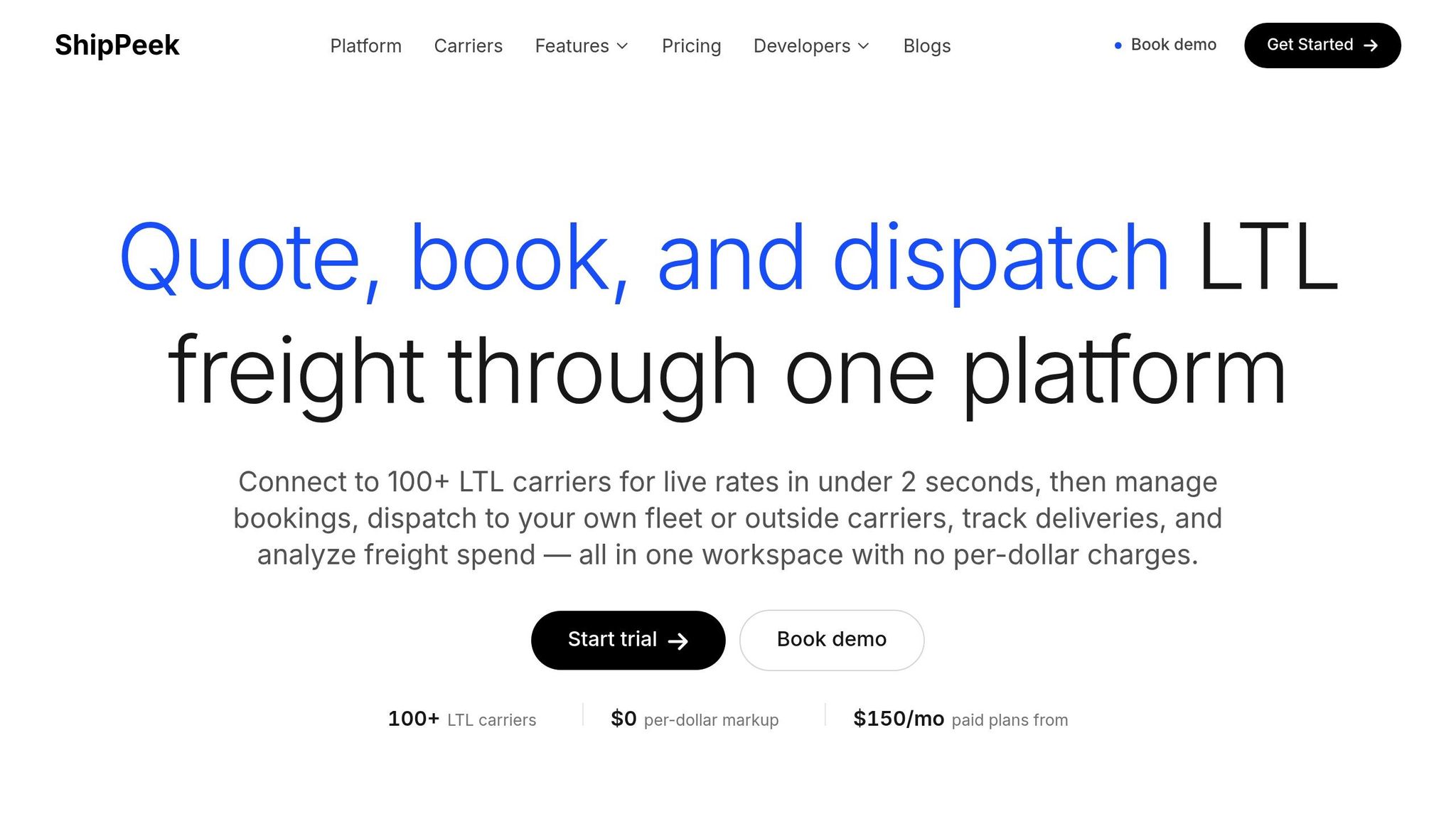
ShipPeek LTL TMS is a SaaS platform tailored for high-volume shippers seeking an all-in-one LTL workflow. With a single API call, users can access real-time rates from over 14 carriers, including Estes, ODFL, Saia, and XPO [5][12]. The platform allows you to book shipments, generate BOLs and shipping labels, schedule pickups, and track deliveries - all with normalized data through one integration.
Pricing is based on a flat-fee subscription model, avoiding per-dollar markups as freight spending increases. Plans start at $749/month, with discounted rates for the first three months. Users get unlimited rate requests, orders, and labels [12]. A 7-day free trial and sandbox environment (api.shippeek.dev) are available for testing before committing [5][7].
ShipPeek works well for retail businesses, manufacturers, and 3PLs looking for predictable costs and a unified platform for managing both contracted carriers and private fleets.
2. SMC³ LTL APIs
SMC³’s APIs offer end-to-end shipment lifecycle management, from strategic rate planning to execution and post-shipment audits. They support various pricing models, including tariff-based, contract, and dynamic pricing. Additional features include eBOL transmission, PRO number assignment, and real-time status updates [6].
In 2024, Express Logistics successfully transitioned over 25 carriers and implemented complex customizations using SMC³ APIs within a tight 60-day timeframe [6].
“SMC³ made the process of transitioning 25+ carriers and complex customizations as ‘all hands-on deck’ effort. The team’s dedicated, consistent, responsive approach allowed us to meet the aggressive 60-day timeline with minimal business disruption.” - Dianna Giltner, Director of Operations, Express Logistics [6]
SMC³’s hybrid REST/SOAP design is particularly appealing for teams working with modern tech stacks. It’s an excellent choice for shippers and 3PLs needing precise transit time data and accurate tariff-level pricing.
3. RXO LTL Technology Integrations

RXO’s API suite is designed to modernize carrier communication by replacing outdated EDI workflows with API-first processes. It supports real-time quoting, API-based tendering, and event-driven tracking, eliminating the delays of batch-oriented EDI systems [7]. This makes RXO a strong option for mid-to-large shippers looking to update their systems without fully overhauling their platforms.
4. NMFTA Digital LTL Council APIs
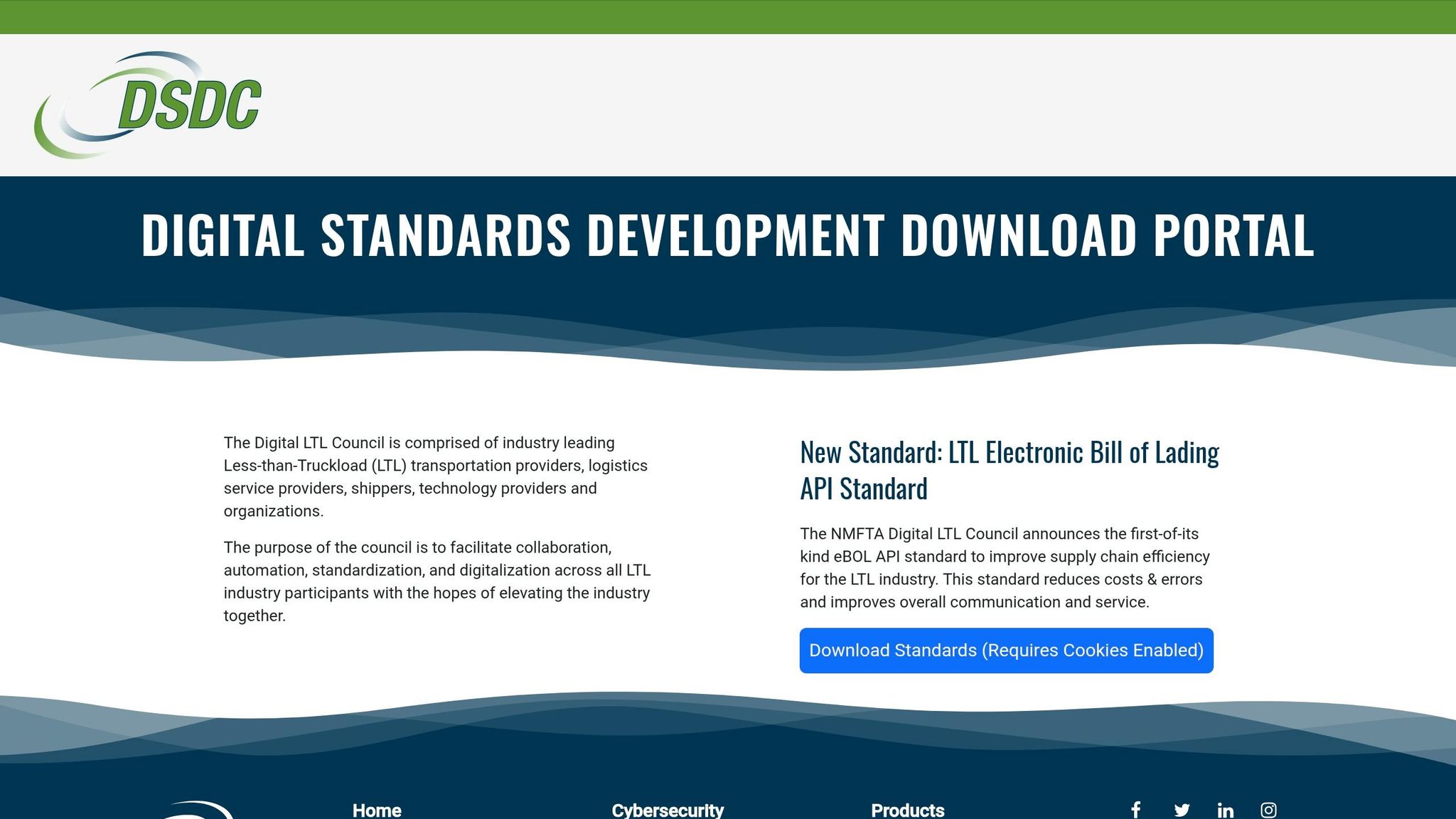
The NMFTA Digital LTL Council focuses on creating standardized API schemas to improve communication between TMS platforms and carriers. While not a commercial API provider, the Council has developed schemas for eBOL, pickup requests, and shipment visibility [14]. In March 2025, they released a standardized API for pickup requests and real-time visibility, building on their 2022 eBOL standard [14].
“By using this API, they will be able to get that information in real time. That’s a huge time-saver, making it much more efficient for the companies to get the appointment and to find out the status.” - Keith Peterson, Director of Operations, NMFTA [14]
Adopting NMFTA standards now can help companies avoid compatibility issues as more carriers align with these schemas.
5. Banyan Technology Freight Pricing APIs
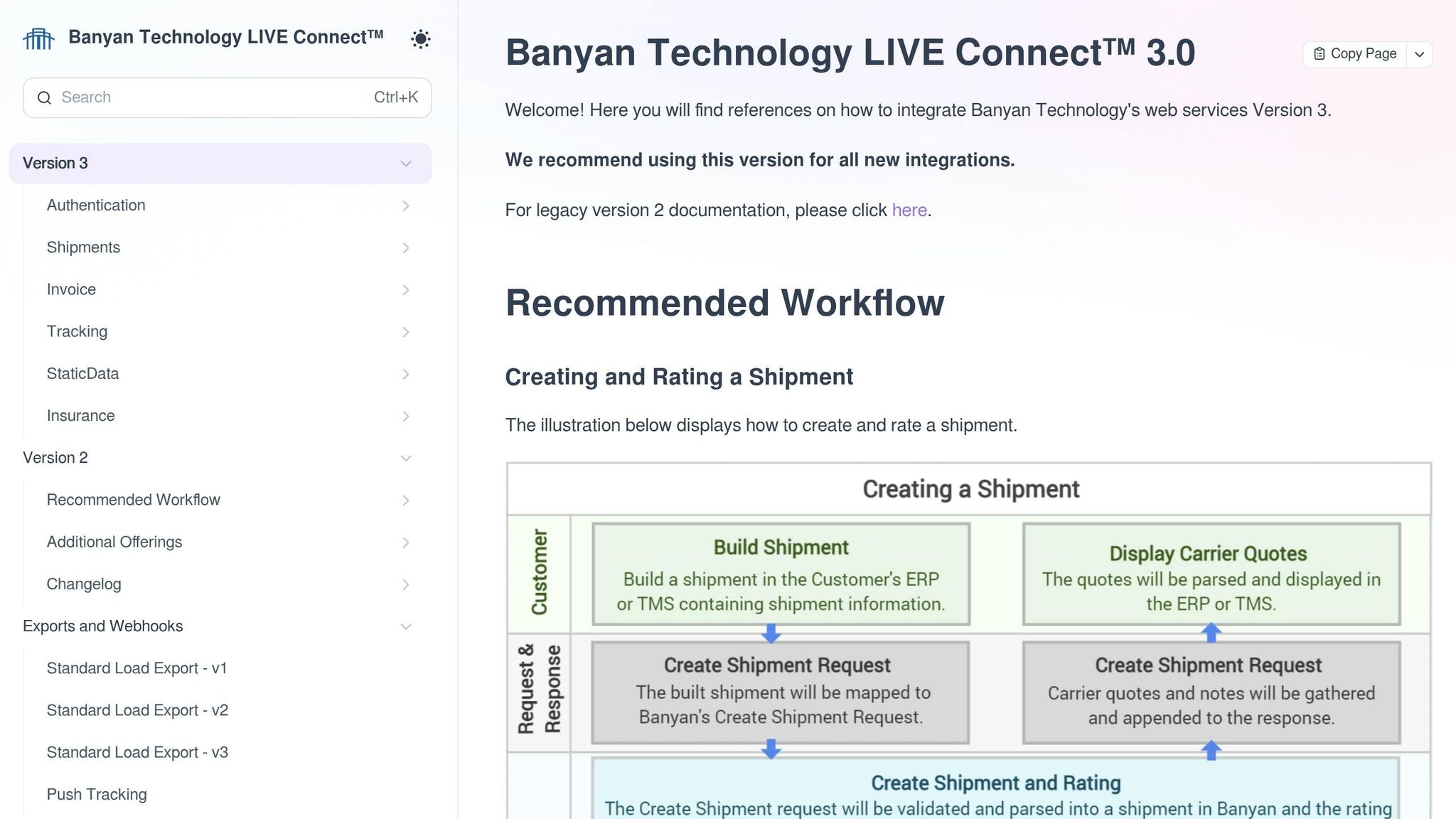
Banyan Technology’s LIVE Connect platform offers a comprehensive solution covering LTL, truckload, parcel, and final-mile operations through a single REST-based integration [15]. A notable feature is its ability to normalize EDI files - converting formats like 204 (tendering), 210 (invoicing), 214 (tracking), and 990 (dispatching) into standardized API responses. The platform also boasts 98% market coverage for parcel shipping [15].
Key features include multi-carrier rate shopping, accessorial handling, and real-time tracking via webhooks [15]. Banyan is a great option for shippers managing multiple freight modes who need seamless ERP integration and automated document handling for BOLs, PODs, and invoices.
How to Choose the Right LTL API for Your Business
Match API Features to Your Workflows
When evaluating an LTL API, it’s crucial to ensure its features align seamlessly with your day-to-day operations. For instance, if your team spends time manually comparing rates across carriers, look for an API with a quoting endpoint that provides live contract rates instead of estimates. Relying on estimated rates can lead to billing discrepancies down the line [12].
Think through every step of your shipping process - rate comparisons, bookings, BOL (Bill of Lading) generation, scheduling pickups, and tracking deliveries. If the API doesn’t adequately support a key stage, such as validating accessorials like liftgate or residential pickups, you might end up resorting to manual workarounds. These inefficiencies can quickly erode the benefits of automation [13].
Check Technical and Operational Fit
A good way to gauge an API’s usability is by testing how quickly a developer can make a successful call from scratch. The best APIs allow for self-serve onboarding within minutes, while older systems might require weeks of onboarding and sales cycles [3].
Look for APIs that offer RESTful JSON responses, standard authentication methods (like Bearer tokens), and a sandbox environment for testing [7][8]. For businesses operating in the U.S., make sure the API supports imperial units (like pounds and inches) and handles USD pricing without issues - overlooking these details can cause unnecessary friction [7][2]. Clear documentation is equally important, especially if it includes working code examples for every endpoint. Poorly documented APIs often lead to delays during integration.
Lastly, consider how the API’s pricing model fits your scaling plans.
Compare Costs and Plan for Growth
The pricing structure of an API can significantly impact your budget, especially as your shipping volume grows. For smaller operations, a pay-as-you-go model might be cost-effective initially, but expenses can rise quickly with increased usage. On the other hand, a flat-fee subscription offers consistent monthly costs, which can be more suitable for businesses with higher shipment volumes.
| Pricing Model | Best For | Typical Cost |
|---|---|---|
| Flat Subscription | High-volume shippers | $150–$750/month [12] |
| Pay-As-You-Go | Startups and SMBs | $0.01–$0.07 per label/shipment [8][11] |
| Enterprise Custom | Large BCOs and 3PLs | $1,000/month [3] |
Be sure to check for any hidden fees, such as fuel surcharges or charges for additional services [2][12]. Testing at least two APIs in a sandbox environment can help you compare performance metrics like latency, support responsiveness, and how well they handle edge cases [11].
Conclusion
Selecting the right LTL API isn’t just about technical specs - it can directly influence freight costs and improve communication. By using live contract rates instead of estimates, you can significantly boost billing accuracy and operational efficiency [12]. These features - better efficiency, tighter cost control, and seamless integration - are what define a dependable LTL API.
Each API highlighted here brings its own strengths to the table. For instance, SMC³ processes over 50 million transactions daily, showcasing its capacity for high-volume operations [9]. Meanwhile, NMFTA emphasizes a standards-driven approach, ensuring consistency and reliability. The best fit for your business will depend on factors like shipment volume, technical capabilities, and the breadth of carrier coverage you need.
If you’re searching for a comprehensive platform that handles rate shopping, booking, and tracking across more than 100 carriers - without hidden fees or freight markups - ShipPeek LTL TMS offers a compelling solution. Starting at $150/month with a 7-day trial, it provides predictable pricing and full API functionality [12].
“When APIs work and the data can be trusted, it’s a game-changer.” - Dianna Giltner, Director of Operations, Express Logistics, Inc. [1]
Start automating early, focus on live rates, and choose an API that grows alongside your business.
FAQs
Do I need EDI if I use an LTL API?
No, using an LTL API means you don’t necessarily need EDI. While EDI operates as an older, batch-processing method for sharing shipping data, LTL APIs provide real-time functionality for quoting, booking, and tracking shipments. APIs are easier to integrate and offer more flexibility, often covering the entire shipment process. Some businesses choose to use both systems to leverage their combined benefits, but for most operations, APIs alone can get the job done.
What data do I need to get accurate LTL rates?
To ensure accurate LTL rates and avoid billing issues, it's crucial to provide detailed shipment information. This includes the weight, freight class, and dimensions (length, width, and height). Additionally, specify the origin and destination zip codes and note any extra services required, such as lift gates or scheduled delivery appointments. Don't forget to include the correct Carrier ID (SCAC) and your customer account ID to apply the proper contract pricing. Tools like ShipPeek LTL TMS make this process easier by pulling real-time rates directly from carrier APIs.
How can I avoid LTL invoice discrepancies?
To steer clear of LTL invoice discrepancies, consider using APIs that access live, accurate contract rates straight from carrier systems during checkout. This eliminates mistakes tied to relying on estimated rates. On top of that, automated invoice reconciliation tools can be a game-changer - they compare carrier invoices with your pre-negotiated rates and shipping details, quickly identifying any inconsistencies. Digital workflows, such as electronic bills of lading (eBOL), also play a key role by standardizing data and reducing errors from manual data entry in carrier communications.